For many Singapore homebuyers, proximity to an MRT station is one of the first considerations when evaluating a residential property. A short walk to public transport can simplify daily commuting, reduce dependence on private vehicles and make travelling across the island more predictable. It is hardly surprising that developments near established MRT stations often attract considerable attention from prospective purchasers.
However, buying a home based solely on its distance from a train station can lead to an incomplete assessment. Not every property near an MRT station offers the same level of convenience, and not every household benefits equally from immediate access to rail transport.
The more useful question is how transport connectivity contributes to the overall quality of a residential location and whether the asking price reflects genuine practical advantages.
Understanding the Relationship Between MRT Access and Residential Demand
Singapore’s extensive rail network has influenced residential development patterns for decades. Areas served by MRT stations generally offer residents convenient connections to employment centres, educational institutions, shopping destinations and recreational facilities.
For working professionals, this accessibility can reduce the complexity of daily commuting. Families may also appreciate having reliable public transport options for school journeys and weekend activities.
From a property perspective, convenient transport access can make a residential development relevant to a wider group of potential buyers and tenants. Nevertheless, proximity should not automatically be interpreted as evidence of stronger investment performance.
A property’s appeal also depends on its surrounding amenities, development quality, maintenance standards, remaining lease and prevailing market conditions.
Buyers should therefore distinguish between transport convenience as a lifestyle benefit and the assumption that it guarantees future capital appreciation.
Walking Distance Is Not the Same as Practical Accessibility
Property advertisements frequently highlight the distance between a condominium and the nearest MRT station. While this information is useful, the actual walking experience deserves closer examination.
A development located relatively close to a station may still involve an inconvenient pedestrian route. Road crossings, traffic junctions, construction activity, sheltered walkway availability and differences in ground levels can influence the journey.
Buyers should consider visiting the property location and walking to the station themselves. This provides a more realistic understanding than relying exclusively on a stated distance.
The surrounding environment also matters. A pleasant pedestrian route with convenient access to shops and food establishments may offer a better daily experience than a shorter but less comfortable walk.
For households with young children or elderly family members, these practical details can become particularly important.
Northern Singapore Offers Different MRT-Connected Residential Environments
The northern region provides several examples of how residential convenience can be shaped by transport infrastructure.
Yishun benefits from the North-South Line, with Khatib and Yishun MRT stations serving different parts of the wider residential area. Established amenities, shopping facilities and community infrastructure contribute to the district’s residential character.
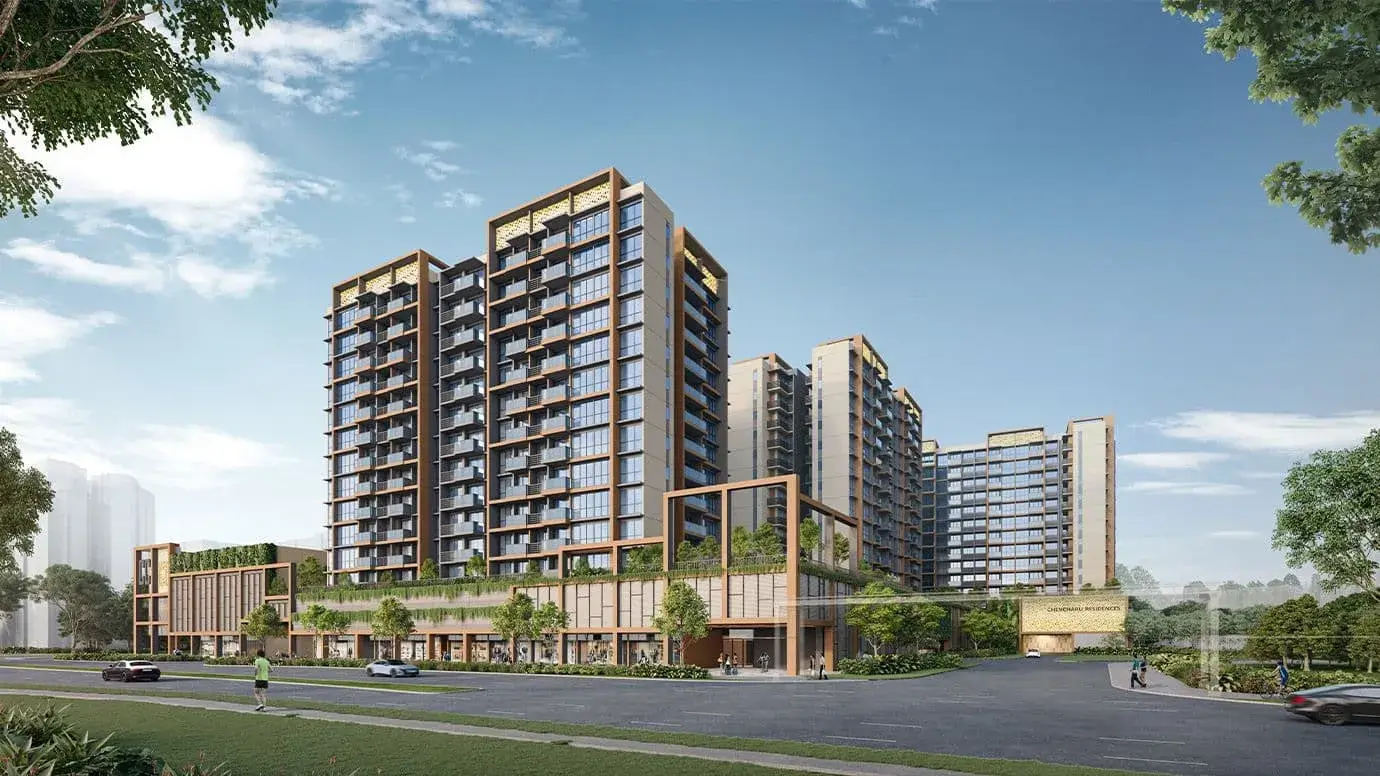
The planned Chencharu Central Residences introduces another dimension to this discussion. Located at Chencharu Close in District 27, the private mixed-use condominium is approximately 0.45km to 0.49km from Khatib MRT station.
The development is expected to accommodate up to approximately 875 homes, alongside a hawker centre, bus interchange and retail facilities. Its proposed mixed-use arrangement reflects the relationship between residential accommodation and supporting transport and commercial infrastructure.
Further north, Sembawang presents a different residential setting. The planned Fablewoode Residences, an executive condominium along Sembawang Road, is approximately 0.5km from Canberra MRT station.
The development is expected to comprise around 265 low-rise homes and sits next to the Sungei Simpang Kanan park connector. This combination may interest buyers who value both public transport access and opportunities for outdoor recreation.
These examples demonstrate that MRT connectivity should be considered alongside the broader residential environment rather than as an isolated selling point.
Does Living Near an MRT Station Justify a Higher Purchase Price?
This is one of the most important questions buyers should ask when comparing properties.
A condominium near an MRT station may command a premium because of its accessibility. However, the size of that premium varies according to location, development characteristics and market conditions.
Buyers should compare similar properties within the same neighbourhood instead of assuming that all MRT-adjacent developments offer equivalent value.
For example, consider two condominiums with comparable unit sizes. One may be closer to the MRT station, while the other offers a quieter residential setting, better internal layouts or more convenient access to daily amenities.
Which represents better value depends on the buyer’s priorities.
A useful approach is to examine recent comparable transactions, current asking prices and the property’s overall specifications. Buyers should also consider whether the additional purchase cost remains manageable after accounting for mortgage repayments, stamp duties and other ownership expenses.
Those purchasing for rental purposes should separately assess tenant demand, competing rental supply and realistic achievable rents. Transport access may support tenant interest, but rental income is never guaranteed.
The Role of Bus Connectivity and Integrated Facilities
MRT stations are important, but Singapore’s public transport network does not operate through rail connections alone.
Bus services provide essential connections between residential neighbourhoods and nearby transport nodes. For some households, a convenient bus journey may be more practical than walking to an MRT station.
Integrated developments also demonstrate how transport infrastructure can be combined with other everyday services. Having retail outlets, food establishments or a transport interchange within the surrounding development can reduce the number of separate journeys residents need to make.
The planned Chencharu Central Residences is one example of this concept, with its proposed residential, retail, hawker centre and bus interchange components.
Similarly, buyers exploring Fablewoode Residences can assess how its proximity to Canberra MRT and the nearby park connector fits their preferred lifestyle.
Both developments have details yet to be officially confirmed, so purchasers should refer to subsequent developer announcements before making commitments.
A More Practical Way to Evaluate MRT Proximity
Before deciding on a property, buyers should consider three questions.
First, does the MRT station connect conveniently to the places they regularly visit? Second, is the walking route genuinely comfortable throughout the year? Third, does the property offer sufficient value when compared with other developments in the same neighbourhood?
These questions help separate meaningful accessibility from marketing claims.
It is also worthwhile to visit the area during peak commuting periods, examine alternative transport options and consider future household requirements.
Conclusion
Living near an MRT station can offer significant everyday convenience, particularly in a city where public transport plays an important role in urban mobility. However, proximity should be evaluated as part of a wider property assessment.
The most suitable condominium is not necessarily the one closest to the station. It is the one that combines practical connectivity, a comfortable residential environment and a purchase price that makes sense for the buyer’s financial circumstances.